
Functional Training: What It Is & Who Needs It
What functional training really means, who genuinely benefits from it, and practical examples that carry over into real life and sport.
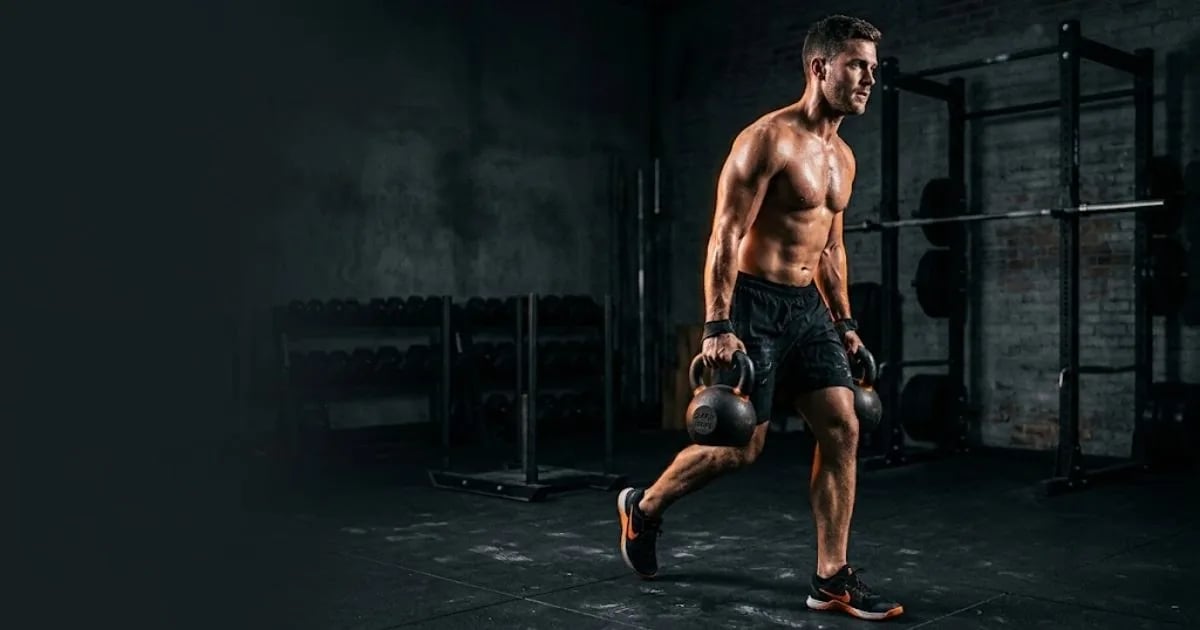
Functional training is one of the most misused terms in fitness. For some people it means wobbling on a stability ball, for others it is any exercise with a kettlebell. As someone with a sport science background, I want to cut through the noise and tell you what functional training actually is, who genuinely needs it, and how it fits into a smart program. Done right, it is one of the most valuable ways to train. Done as a gimmick, it is a waste of your time.
What functional training really means
Functional training means training movements and qualities that carry over to the demands of your life or sport. The word "functional" only makes sense relative to a function. Squatting down and standing up is functional for everyone, because you do it every day. Sprinting and cutting is functional for a footballer. Carrying heavy loads is functional for a parent hauling shopping and kids.
In other words, functional training is not a specific list of exercises. It is a principle: train the way your body actually needs to move and produce force in the real world. That is very different from the marketing image of someone balancing on an unstable surface, which often trains balance at the cost of the strength that actually matters.
The movement patterns that matter
Most real-life and athletic demands come down to a handful of fundamental patterns. A genuinely functional program covers all of them.
- Squat: sitting down and standing up, lifting from the ground.
- Hinge: bending at the hips to pick things up, the foundation of a strong back.
- Push: pressing away from you, horizontally and overhead.
- Pull: rowing and pulling toward you, which balances all that pushing.
- Carry: holding and moving a load, one of the most underrated exercises there is.
- Rotation and anti-rotation: controlling your trunk against twisting forces.
Train these patterns well and you have covered the vast majority of what a functional body needs. Everything else is a variation on these themes.
Who actually benefits from functional training
The honest answer is almost everyone, but for different reasons.
Older adults
For people getting older, functional training is arguably the most important kind. Being able to get off the floor, carry things, and keep your balance is what preserves independence. Strength here is not vanity, it is quality of life.
Athletes
For athletes, functional means sport-specific. A footballer needs power, change of direction and repeat-sprint ability, which I cover in detail in my article on strength and conditioning for footballers. The functional work is whatever transfers to their game.
Desk workers
For people who sit all day, functional training counteracts the damage of a sedentary life: it rebuilds hip and back strength, improves posture, and makes everyday tasks feel easy again.
Real functional exercises
Let me give you concrete examples rather than vague ideas.
- Goblet squats: teach a clean squat pattern and build the legs.
- Romanian deadlifts: train the hinge that protects your back.
- Loaded carries: farmer's walks build grip, trunk stability and total-body strength.
- Step-ups and lunges: single-leg strength for balance and real-world movement.
- Push-ups and rows: upper-body strength you can actually use.
- Pallof presses: anti-rotation work that builds a genuinely strong core.
Notice that most of these are simply well-chosen strength exercises. That is the point. Good functional training and good strength training overlap far more than the marketing suggests.
The myths worth dropping
A few things get sold as functional that usually are not worth your time.
- Constant instability work: balancing on a wobbly surface reduces how much force you can produce, so it is a poor way to build usable strength for most people.
- Endless novelty: a new "creative" exercise every session looks impressive but prevents the progressive overload that actually drives adaptation.
- Avoiding barbells: heavy compound lifts are among the most functional things you can do, not the opposite of functional.
If a program is all circus tricks and no progression, it will not make you meaningfully stronger or more capable. This is one of the things I fix most often when I take on a new client, and if you want that kind of structured approach you can see how I work.
How to build a functional program
Building a functional program is not complicated. Cover the main movement patterns, load them progressively over time, include some carries and core stability, and add sport-specific work if you are an athlete. Train two to four times a week, keep the exercises challenging, and progress them as you get stronger. That is a program that will make your body genuinely more capable in the real world, which is the entire point of the word functional.
A sample functional session
Here is how those patterns come together in a single full-body session. It looks a lot like a good strength workout, because that is exactly what functional training should be.
- Goblet squat: 3 sets of 8 to 10 reps to train the squat pattern.
- Romanian deadlift: 3 sets of 8 reps to train the hinge and protect the back.
- Push-up or dumbbell press: 3 sets to build usable pushing strength.
- Single-arm row: 3 sets of 10 per side for pulling and trunk control.
- Farmer's carry: 3 heavy walks for grip, posture and total-body stability.
- Pallof press: 3 sets per side for anti-rotation core strength.
Progress the loads over time and you have a genuinely functional program that carries into everything you do.
Mobility and control matter too
Functional training is not only about strength, it is about being able to access that strength through a full range of motion. If you are strong but stiff, you cannot express that strength safely when life demands it. That is why I include mobility work for the hips, ankles, thoracic spine and shoulders, and why I emphasise control at the end ranges of a movement rather than just the middle. A body that is both strong and mobile is far more resilient than one that is only one or the other. This is especially true as we age or when returning to activity after time off, when restoring range and control often unlocks strength that was there all along but locked away behind stiffness.
How functional training carries into daily life
The real test of functional training is not what happens in the gym, it is what happens outside it. When your training covers the fundamental movement patterns and loads them properly, ordinary tasks stop being a strain. Lifting a heavy box becomes a hinge you have practised a hundred times. Carrying shopping in from the car becomes an easy loaded carry. Getting up off the floor with a child in your arms is just a squat with a bit of extra weight. Climbing stairs, catching yourself when you trip, playing sport on the weekend without pulling something, all of it improves because you have trained the patterns underneath them. That is the whole promise of functional training done properly: a body that handles real life with room to spare. It is not about looking a certain way, though that often comes as a bonus. It is about capability, confidence and resilience that you carry into everything you do, for decades rather than months.
The best results come from a plan built around you - your body, your sport and your goals. I coach people in Bugojno and online across Bosnia, from complete beginners to athletes. If you want a program made specifically for you, see how I work and get in touch.
FAQ
- Is functional training better than lifting weights?
- It is a false choice, because good functional training usually is lifting weights through real movement patterns. Heavy compound lifts like squats, hinges and carries are among the most functional exercises there are.
- Do I need special equipment for functional training?
- No. Bodyweight movements, dumbbells, kettlebells and a barbell cover almost everything. Functional training is about how you move and load your body, not about buying unusual gear.
- Is functional training good for older adults?
- It is one of the best things older adults can do. Training to squat, hinge, carry and balance preserves the strength and independence that matter most as we age.