
Training Young Footballers (13-16): What Is Safe and Smart
How a young footballer aged 13 to 16 can safely lift, work on explosiveness and progress, without risking growth and without the early specialization trap.
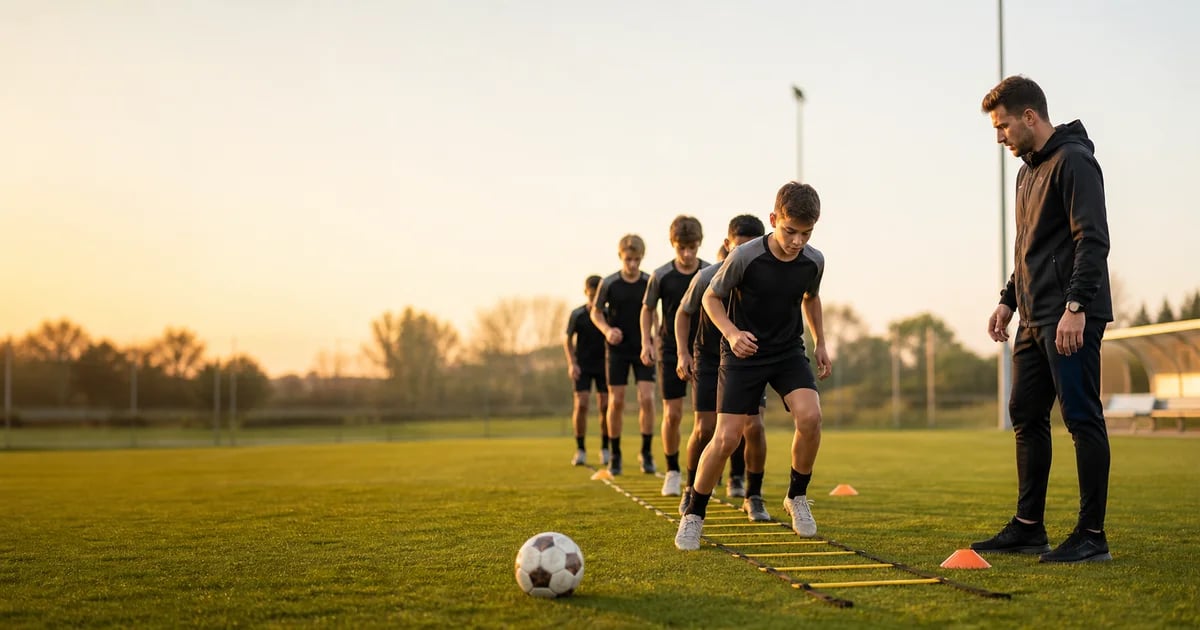
My name is Armin, and I work as a strength and conditioning coach in Bugojno and online across the region. As a former professional footballer who now prepares young players, most of the calls I get come from parents asking the same thing: can my 14 year old train in the gym, and will it hurt their growth. This is my honest answer, from practice, not from a textbook.
The short answer
Yes, a young footballer aged 13 to 16 can and should work on strength, and it will not stunt their growth. What actually causes harm is poor technique, loads that are too heavy too soon, and too much total training. When the load is set up smartly and the technique is clean, strength training at this age reduces injuries and builds a foundation for later.
The growth myth everyone repeats
The story that lifting stops kids from growing is one of the most stubborn myths I hear. The real risk to growth plates does not come from controlled strength training with good technique. It comes from falls, collisions on the pitch, and lifting maximal weights without supervision. A kid who learns to squat and pull with bodyweight and light load is safer, not more at risk.
I have brought plenty of youngsters from Bugojno and the surrounding area through the gym. None of them stopped growing, but all of them became steadier on the pitch and missed fewer games due to strains.
Where you start: technique before weight
For the first few months with a young player there is almost no heavy lifting. We build movement patterns they will use their whole career.
- Bodyweight first. Squats, push-ups, lunges and pull-ups with their own bodyweight before any barbell.
- The bar and lighter loads. Once the technique settles, we add small load with higher reps, never forced.
- Landing control. Learning to land properly from a jump protects the knees more than any other drill at this age.
- Core and stability. A strong core keeps the body compact in duels and when changing direction.
The goal in this phase is not exhaustion or sweat to the point of collapse. The goal is a clean movement and a kid who leaves the session feeling good, not broken.
The early specialization mistake
The biggest mistake I see is pushing a 12 or 13 year old to do nothing but football, all year round, with no break and no other sport. That leads to burnout and to repetitive injuries from the same movement day after day.
A young body needs variety. Basketball, athletics, swimming, even plain running through the woods build the coordination and athletic base that football alone does not give. Players who did several sports as kids later learn new movements more easily and break down less often. Specialization comes later, around 15 or 16, when the body is ready.
How much is too much: managing load
A young player often trains with the club five times a week, has a match on the weekend, and then a parent takes them to an extra session on top. That adds up fast. When I work out how much a kid can handle, I look at everything together: club training, matches, and gym work.
Two shorter strength sessions a week are plenty at this age, spaced away from match day. If a kid keeps complaining about pain in the knee or heel, that is a sign of too much load, not too little. Sleep and rest during puberty count as much as the training itself, because that is when the body both grows and repairs.
What a smart week looks like
Here is how I usually lay out a week for a 14 or 15 year old who has club training.
- Strength day 1. Lower body with bodyweight and light load, plus a few explosive jumps while fresh.
- Strength day 2. Upper body and core, with the focus on technique and control.
- Club sessions and match. Left as the club requires, and we do not double them up with heavy work.
Order matters. I never put heavy leg work the day before a match, because the kid needs freshness then, not fatigue.
If you want your kid to train smart
The best results with young players come when the plan is tailored to their age, club schedule and current level, not copied from an adult professional. I have more than 10 years in fitness and nearly 20 years in sport behind me. I coach in person in Bugojno and online across the region. If you want your young footballer to progress safely, see how I work and get in touch.
FAQ
- Can a child aged 13 to 16 lift weights?
- Yes, with good technique and smart loading, strength training is safe and useful at this age. It starts with bodyweight and light load, and the focus is on clean movement, not big weights. This kind of training reduces injuries and builds a foundation for later.
- Will lifting weights stunt my child's growth?
- No. Controlled strength training with good technique does not harm growth plates. The risk comes from falls, collisions on the pitch, and maximal weights without supervision, not from smartly programmed training.
- How often should a young footballer train in the gym?
- Two shorter strength sessions a week are plenty at this age, spaced away from match day. It is important to count club training and matches in the total load so the child does not burn out.
- Is it good for a child to only play football?
- No. Early specialization in football alone leads to burnout and repetitive injuries. Multiple sports and varied movement at this age build a better athletic base, and specialization comes later.