
Injury Prevention in Football: Prehab and Mobility That Actually Keep You on the Pitch
Most football injuries are not bad luck. They are the result of a weak posterior chain, poor mobility, no real warm-up and playing tired. Here is the exact prehab and mobility work I use with my players in Bugojno to keep them on the pitch.
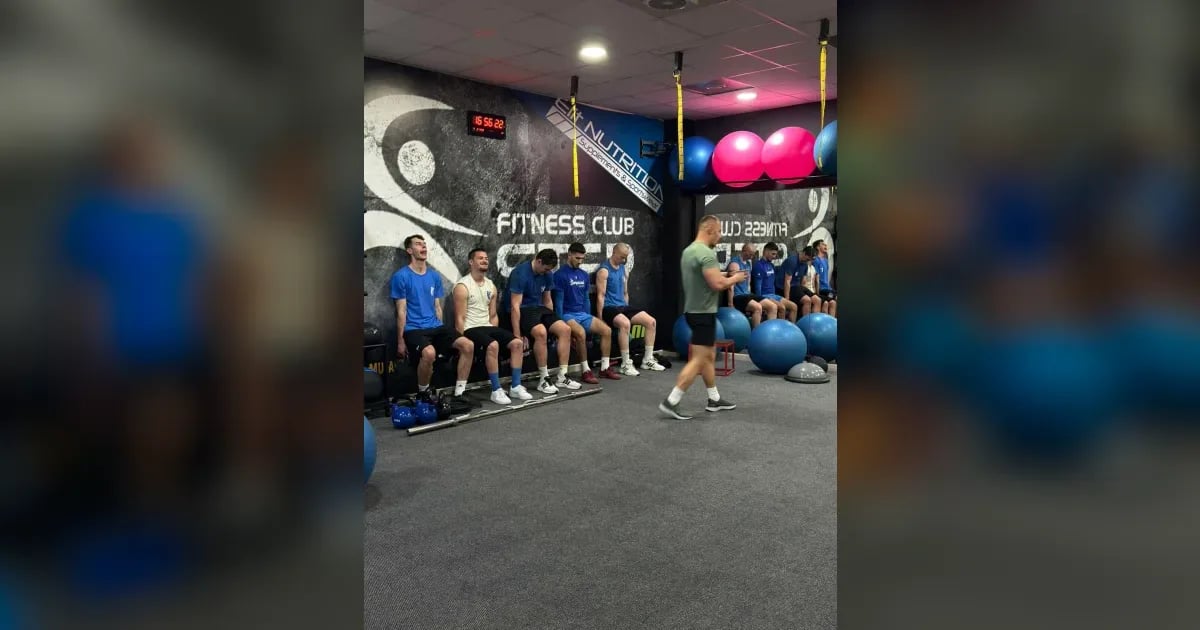
I have lost count of how many footballers have come to me limping, frustrated, saying the same thing: "Coach, it just happened, I didn't do anything wrong." And almost every time, when we look closer, the injury was building for weeks or months. A hamstring that let go in the 70th minute did not fail because of one sprint. It failed because it was weak, tight, tired and asked to do something it was never prepared for.
I train footballers here in Bugojno, from young lads chasing a spot in the first team to weekend players who just love the game and do not want to spend half the season on the bench. In this guide I want to give you the real, practical stuff. Not theory, not fancy words. The prehab and mobility work that keeps players on the pitch.
Why football injuries actually happen
Before we fix anything, you need to understand why the body breaks down. In my experience it almost always comes down to four things.
- A weak posterior chain. The back of your body, the hamstrings, glutes and lower back, is your engine for sprinting, jumping and changing direction. Most amateur players are quad dominant and weak behind. That imbalance is where hamstring strains and knee problems are born.
- Poor mobility. Stiff ankles, tight hips and locked-up thoracic spines force other joints to move more than they should. If your ankle cannot bend, your knee pays the price. If your hips cannot open, your groin and lower back pay.
- No real warm-up. A couple of static stretches and a jog around the pitch is not a warm-up. That is a routine, not preparation. Cold tissue snaps.
- Fatigue. Tired muscles lose their timing and their braking ability. Most non-contact injuries happen late in matches or at the end of hard training weeks. Load management is injury prevention.
Fix these four and you have solved most of the puzzle. Let me show you how.
A real warm-up routine
Your warm-up should raise your temperature, wake up your nervous system and rehearse the movements you are about to perform. I give my players around 12 to 15 minutes. Rushing this is the single most common mistake I see.
- Pulse raiser (3 to 4 minutes): easy jog, then side shuffles, backpedals and gradual accelerations. Get the heart rate up and the blood moving.
- Dynamic mobility (4 to 5 minutes): leg swings front and back, leg swings side to side, walking lunges with a rotation, world's greatest stretch, hip openers and ankle rocks. Full range, controlled, no bouncing.
- Activation (3 minutes): glute bridges, banded lateral walks and a few Nordic curl lowerings or a couple of single-leg deadlift reps. This switches on the muscles that protect you.
- Neural primers (2 to 3 minutes): a few short sprints building up to near top speed, quick footwork and one or two jumps with a soft landing. You are telling your body "we are about to go fast".
Notice there are no long static stretches before you play. Save those for after. Before a match or hard session, everything should be moving.
Key prehab exercises every footballer needs
Prehab means the work you do to prevent injury before it ever happens. These are the exercises I keep coming back to with my players. You do not need a fancy gym, most of this you can do at home or at the club.
Hamstrings and the Nordic curl
If I could only give a footballer one prehab exercise, it would be the Nordic curl. The hamstring works hardest when it is lengthening under load, exactly the moment most strains happen. The Nordic trains that eccentric strength directly.
- Kneel down, have a partner or a fixed object hold your ankles.
- Keep your body in a straight line from knees to head, brace your core and glutes.
- Slowly lower yourself forward, fighting gravity for as long as you can, then catch yourself with your hands.
- Start with 2 sets of 3 to 5 reps twice a week. Even if you can only control the top few centimetres at first, that is fine. Build from there.
Add in single-leg Romanian deadlifts and glute-ham raises over time. A strong, robust hamstring is the best insurance policy in football.
Hips and glutes
Strong, mobile hips protect your groin, knees and lower back. My go-to work includes glute bridges and hip thrusts for strength, banded lateral walks and clamshells for the smaller stabilising muscles, and 90/90 hip switches for mobility. Give me a footballer with strong glutes and I will show you someone who sprints faster and gets injured less.
Ankles
Ankle sprains and stiff ankles are massively underrated problems. If your ankle cannot dorsiflex, meaning your knee cannot travel forward over your toes, your movement quality collapses. Work knee-to-wall ankle stretches daily, do calf raises through a full range, and add some single-leg balance work on unstable surfaces. Balance training builds the reflexes that catch you before a sprain.
Groin and adductors
The Copenhagen plank is one of the best-kept secrets for footballers. Groin strains are common because we constantly change direction, tackle and reach for the ball. Lie on your side, put your top foot on a bench, and hold a side plank, lifting your bottom leg to meet the bench. Start with short holds, even 10 seconds, and build up. Strong adductors mean fewer groin problems, simple as that.
Core
Your core is not about six-pack abs, it is about transferring force and protecting your spine when you sprint, jump and twist. I keep it functional: planks and side planks, dead bugs, Pallof presses with a band for anti-rotation, and bird dogs. A stable core lets your arms and legs do their job without your back paying for it.
Mobility work that matters
Mobility is strength through a full range of motion, not just being bendy. For footballers, the three areas I focus on most are ankles, hips and the thoracic spine. Spend 8 to 10 minutes a few times a week on deep squat holds, hip openers like the 90/90, thoracic rotations and controlled ankle circles. Do this consistently and you will move better, feel looser and take stress off the joints that get injured.
Load management: the part everyone ignores
Here is a truth that is not glamorous but is absolutely critical. Most injuries are not caused by doing too little, they are caused by doing too much, too soon. A player who trains twice a week suddenly playing three matches in seven days is asking for trouble.
- Increase your training load gradually. Big spikes in volume or intensity are where injuries live.
- Respect recovery. Sleep, food and hydration are training, not extras.
- Do not train through sharp pain. Soreness is fine, sharp pain is a message.
- Watch your fatigue late in the week. If you are dead tired, that is when technique breaks and injuries strike.
Return to play basics
If you do get injured, coming back too early is how a small problem becomes a long-term one. The rule I follow with my players: you return when you can perform the demands of the game without pain and without holding back. That means full-speed sprinting, cutting, jumping and landing all feel normal, not just jogging in a straight line. Rebuild strength in the injured area, test it under real conditions, and only then step back onto the pitch. Patience early saves months later.
Train smart, play longer
Injury prevention is not complicated, but it does require consistency. Fifteen minutes of prehab and mobility a few times a week will do more for your football than any expensive gadget. I have seen players here in Bugojno go from constantly niggled to playing full seasons injury-free just by taking this work seriously.
If you want a program built around your body, your position and your weaknesses, I am here for you. You can book an in-person session with me in Bugojno or start online coaching wherever you are, and I will build you a plan that keeps you strong, mobile and on the pitch. Message me and let us get to work.
FAQ
- How often should I do prehab and mobility work?
- For most footballers, two to three short sessions per week is enough. Prehab exercises like Nordic curls and Copenhagen planks can be done twice a week, and 8 to 10 minutes of mobility a few times a week keeps you moving well. Consistency beats intensity here, little and often is far better than one long session you dread.
- Are Nordic curls safe if I have never done them?
- Yes, as long as you start conservatively. Begin with just 3 to 5 slow reps, controlling only the range you can manage, and use your hands to catch yourself. Expect some muscle soreness the first week, that is normal. Build up gradually over a few weeks. If you have a current hamstring injury, get guidance first before loading it.
- Can you help me if I am not in Bugojno?
- Absolutely. I coach players in person here in Bugojno, but I also run online coaching for people anywhere. I build you a program tailored to your position, your body and your weak points, and I check in on your progress and technique. Message me and tell me your situation, and we will find the right setup for you.