
Core Training for Athletes: Build a Strong, Injury-Resistant Trunk
Your core's real job isn't crunches, it's resisting movement and transferring force. Here's how I train a strong, injury-resistant trunk for athletes in Bugojno.
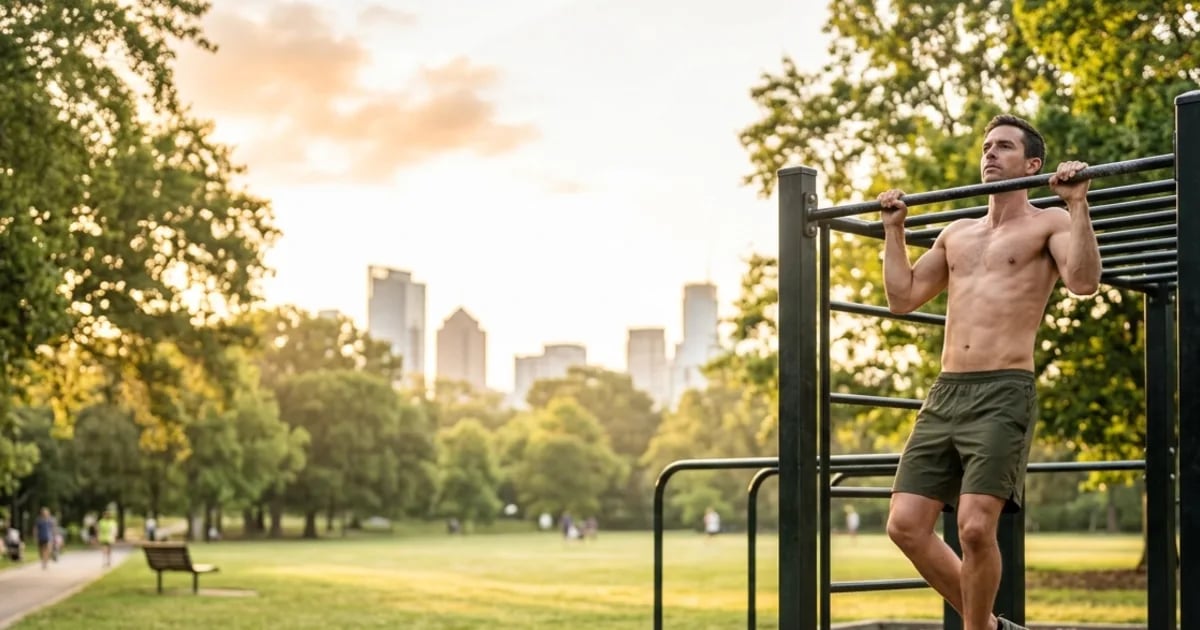
I'm Armin, and I coach footballers and athletes in Bugojno. If I had a euro for every athlete who came to me asking for a six-pack routine, I could buy the gym. But here is the truth I tell every one of them: the core is not there to look good, it is there to keep you strong, stable and healthy under load. Once players understand what the core actually does in sport, they stop chasing endless crunches and start training in a way that makes them better and keeps them off the treatment table.
What the core actually does
The core is not just your abs. It is the entire cylinder of muscle around your trunk: the abdominals at the front, the obliques on the sides, the deep muscles that wrap around your spine, and the muscles of the lower back. Its real job in sport is not to bend you forward over and over. Its job is to resist unwanted movement and to transfer force between your lower and upper body.
Think about it. When you sprint, your trunk stays rigid so the power from your legs reaches the ground instead of leaking out through a wobbly middle. When you strike a ball or take a shoulder from an opponent, your core braces so your spine does not fold. When you cut hard to change direction, your trunk resists the rotation that would otherwise throw you off balance. That is the core doing its real work: bracing, anti-rotation, anti-extension, and force transfer.
Why sit-ups are not enough
Sit-ups and crunches train one thing: bending the spine forward, over and over. But how often does a footballer need to repeatedly curl their spine in a match? Almost never. Meanwhile, high volumes of spinal flexion can irritate the lower back over time. So training built around endless crunches gives an athlete very little of what they need and a decent chance of an achy back.
This does not mean sit-ups are forbidden. It means they should be a tiny slice of the picture, not the whole meal. When I see a player who only does crunches, I know their trunk is usually weak in exactly the ways that matter: they cannot brace under a heavy load, they collapse when pushed sideways, and they leak power when they sprint. We fix that by training the core the way it is used.
The best core exercises for athletes
Here are the tools I rely on with my athletes in Bugojno. Notice how few of them look like traditional ab work.
- Pallof press: the king of anti-rotation. You hold a band or cable that is trying to twist you, and you resist. This directly builds the stability you need to cut, sprint and take contact.
- Loaded carries (farmer's and suitcase carries): walking with heavy weight forces the whole trunk to stay tall and rigid. The suitcase carry, with weight in one hand, is anti-rotation and anti-lateral-flexion at the same time. Few exercises give more return.
- Planks and side planks: simple, honest anti-extension and anti-lateral-flexion. Done with a hard brace and good position, not held forever, they teach the trunk to stay stiff.
- Anti-extension work (dead bugs, ab wheel rollouts): these train the core to stop the lower back from over-arching, which protects the spine during sprinting and jumping.
- Bird dogs and rotational chops: for coordination and controlled force transfer between hips and shoulders.
How a strong core improves performance
A strong, stable trunk is a better bridge between your lower and upper body. When that bridge is solid, more of the force your legs produce actually shows up in your sprinting, jumping and striking. I have seen players add noticeable power to their shot and their acceleration simply by building a trunk that no longer leaks energy.
Stability also means better balance in duels. A player with a strong core stays on their feet when they get bumped, holds their line when they cut, and keeps their shooting technique clean under pressure. None of that comes from a stronger stomach in the mirror. It comes from a trunk that knows how to brace and resist.
How a strong core prevents injury
This is the part I care about most, because I have posts on injury prevention in football for a reason: I would rather keep a player on the pitch than rehabilitate them off it. A well-trained core protects the lower back by controlling how much the spine bends and twists under load. It supports the hips and helps keep the pelvis in a good position, which takes stress off the hamstrings and groin, two of the most common problem areas in football.
When the trunk is weak, the body compensates. The lower back takes forces it was never meant to absorb, the hips lose control during landing and cutting, and small problems snowball into strains and aches. A strong, well-rounded core is quiet insurance. You do not notice it working, but it is the reason a lot of players I train stay available all season.
Train your trunk with me in Bugojno
If your core work has been nothing but crunches, you are leaving real performance and real durability on the table. Train your trunk to brace, to resist rotation, to carry heavy loads and to transfer force, and you will feel the difference in your sprint, your shot and your body at the end of a hard match. If you are an athlete around Bugojno who wants a trunk that makes you stronger and keeps you healthy, come and train with me. Let's build a core that actually does its job.
FAQ
- Are sit-ups bad for you?
- Sit-ups are not evil, but they are overrated and often misused. They train repeated spinal flexion, which is not the core's main job in sport and can irritate the lower back in high volumes. For athletes I get far better results training the core to resist movement rather than create it, which is what actually happens on the field.
- How often should athletes train their core?
- The core is involved in almost every lift and sprint, so it gets worked constantly through big movements like squats, deadlifts and carries. On top of that, two or three short dedicated core sessions per week, ten to fifteen minutes each, is plenty. Consistency matters far more than long, exhausting ab workouts.
- What is anti-rotation training?
- Anti-rotation means training your trunk to resist twisting forces rather than to twist. The Pallof press is the classic example: you hold a cable or band pulling you sideways and refuse to let it rotate you. This builds exactly the kind of stability an athlete needs to sprint, change direction and take contact without the spine giving way.
- Will core training give me a six-pack?
- Core training builds the muscle, but whether you see a six-pack depends mostly on body fat, which comes down to nutrition. My athletes train the core for performance and injury resistance first, and the visible abs are a nice side effect for those who also manage their diet. Chasing looks alone usually leads to weak, poorly functioning trunks.