
Return to Play After a Knee (ACL) Injury
What return to play after an ACL knee injury looks like: the phases, the criteria for return and the bridge from rehab to real performance. Not medical advice.
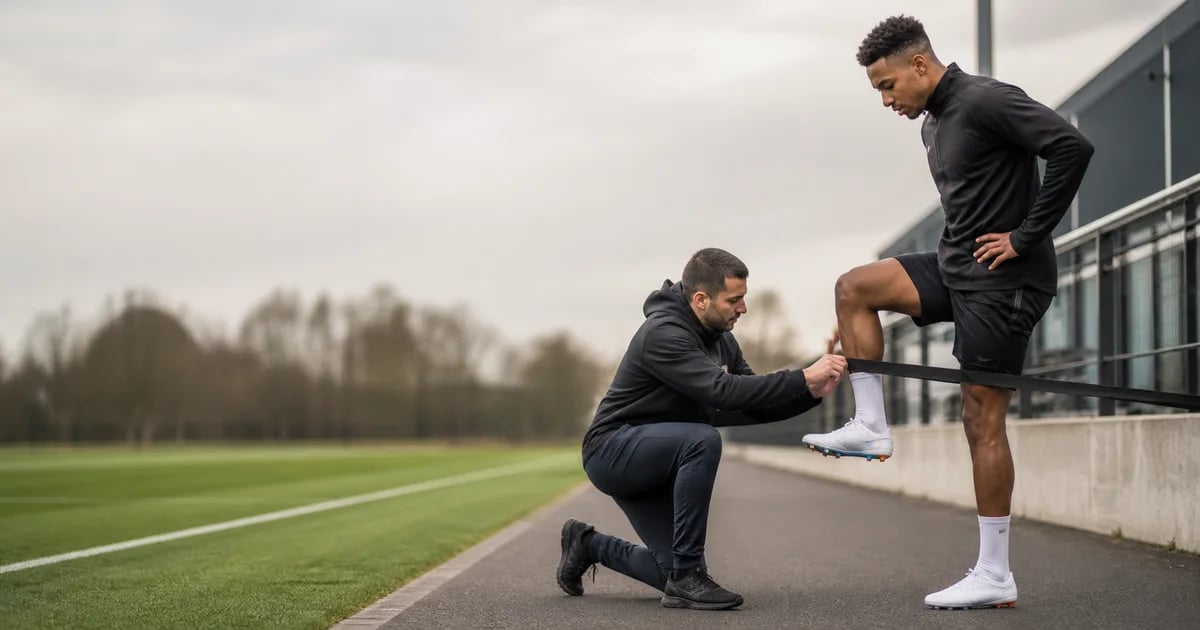
My name is Armin, and I work as a strength and conditioning coach in Bugojno and online across the region. As a former footballer I have been through injuries, and I have seen plenty of players tear the ACL in their knee. This piece is about how an athlete returns to play after an ACL injury, from the point of view of the coach who takes over the player once surgery and basic rehab are done. Let me be clear up front: this is not medical advice and it does not replace your doctor and physiotherapist.
The short answer
Return to play after an ACL injury is a process that goes in phases and lasts months, most often around nine to twelve months or longer. You do not return by the calendar, you return by meeting criteria: full strength in both legs, knee control on landing and change of direction, and trust in the leg. Skipping phases is the fastest route to a repeat injury.
Why you return by criteria, not by a date
The biggest mistake I see is a player returning because six months have passed, not because the leg is ready. A date on paper knows nothing about how strong your injured leg is compared to the healthy one, or how well you control the knee when you land or change direction sharply.
So in my work we do not follow the calendar, we follow numbers and quality of movement. As long as the injured leg lags behind the healthy one in strength, or the knee caves inward on landing, the player is not ready for the pitch, no matter how ready they feel.
Where I come into the story
The first weeks after surgery belong to the doctor and the physiotherapist. That is where range of motion comes back, swelling settles and the muscle wakes up. As a coach I usually take the player over later, once the knee is calm and the physio gives the green light for serious strength and preparation work.
My job is the bridge between rehab and the pitch. The physio brings the knee back to function, and I build a leg that can hold up under a sprint, a duel and a sharp cut, equally on both sides.
The strength phase: rebuild the lost leg
After an ACL injury the injured leg almost always weakens and shrinks. The first real task is to rebuild its strength and match it to the healthy one.
- Single-leg work. Bulgarian split squat, single-leg press and lunges, because the gap between the legs only shows when they work separately.
- Posterior chain strength. Romanian deadlift and hamstring work, which unload and protect the knee.
- Control through full range. Slow and controlled, with a focus on what the injured leg tries to avoid.
- Symmetry is the goal. We work until the injured leg catches the healthy one, not until it simply feels better.
There is no rushing here. A leg that looks fine while walking can be far from a leg that is ready to sprint and jump.
The movement phase: landing, braking and change of direction
Once strength is matched, we move to what the knee most often gets injured on: landings, braking and sharp cuts. This is the phase most often skipped, and it is exactly the one that decides whether you hold up on the pitch.
First we teach the knee to accept force properly. A soft landing on two legs, then on one, then controlled braking out of a run, and only then change of direction. Each step comes only when the previous one is clean and painless. A knee that caves inward on landing is a sign to go a step back, not forward.
The return-to-play phase: back toward the game
The last phase brings the player back into the rhythm of the sport. Here everything combines: full-speed sprints, changes of direction under fatigue, work with the ball and simulated match situations. The goal is a knee that holds up not only for a fresh takeoff, but for the one in the 80th minute when the legs are tired.
Trust in the leg is the last part to come. Many players are physically ready before they mentally trust the knee. That is why in the final weeks I deliberately set up situations that demand the player cut and land sharply without thinking, because the knee has to be ready when the head has no time to decide.
Signs you are ready, and that you are not
- Ready: both legs equally strong, landing and cutting clean and painless, and you trust the leg under fatigue.
- Not ready: the injured leg still weaker, the knee caving inward on landing, or you feel uncertain on a sudden movement.
- Red flag: swelling or pain after training that does not clear, that is a sign to go back to the doctor.
- Patience: one good day does not mean ready, ready is when several weeks are consistently good.
I always go through these criteria together with the player's physiotherapist. Coach and physio have to be on the same side, because the player loses when the messages do not match.
If you are coming back from a knee injury
Return after an ACL injury goes best when the plan is tailored to your leg, your sport and your current point of recovery, and when the coach works together with your physiotherapist. I have more than 10 years in fitness and nearly 20 years in sport behind me. I coach in person in Bugojno and online across the region. If you are coming back to play and want a safe bridge from rehab to performance, see how I work and get in touch. Everything written here comes from a coach's experience and does not replace your doctor's advice.
FAQ
- How long does return to play take after an ACL injury?
- Most often around nine to twelve months, and for some longer. It matters that you return by meeting criteria rather than by the calendar, because returning too early is the most common cause of re-injury. The exact timeline for you comes from your doctor and physiotherapist.
- When does a coach take over a player after ACL surgery?
- The first weeks belong to the doctor and physiotherapist, who restore range of motion and calm the knee. The coach usually comes in later, once the physio gives the green light for serious strength work and preparation for the pitch.
- How do I know I am ready to return to play?
- When both legs are equally strong, landing and change of direction are clean and painless, and you trust the leg even under fatigue. One good day is not enough; you are ready when several weeks are consistently good, with the physiotherapist's agreement.
- Is this article medical advice?
- No. This is the experience of a strength and conditioning coach and covers the bridge from rehab to performance. For diagnosis, surgery and medical decisions, always follow your doctor and physiotherapist.